Elementary Series #1: Repentance From Dead Works
We all do works in any kinds, there are good ones and bad ones. But God see this in a different way. In His eyes, there are alive ones and dead ones. Then what does dead works mean in the Bible?
ENGLISH - BASICS
YTM
10/5/20254 min read
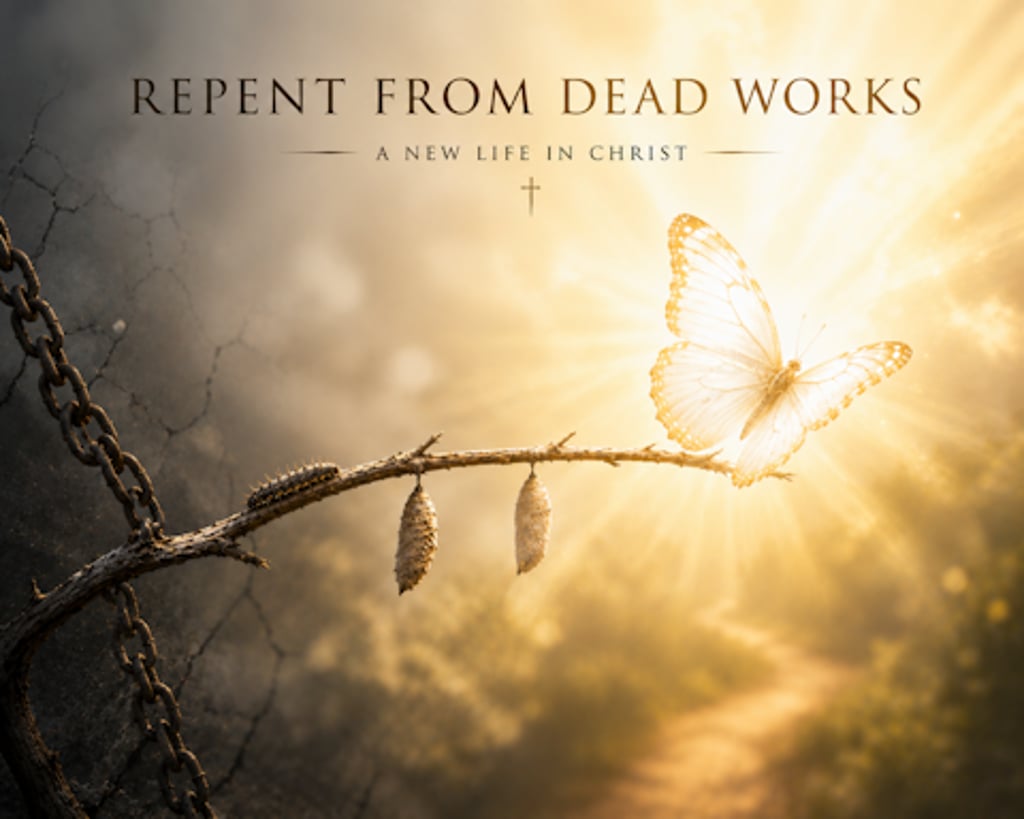
Therefore leaving the principles of the doctrine of Christ, let us go on unto perfection; not laying again the foundation of repentance from dead works, and of faith toward God, Of the doctrine of baptisms, and of laying on of hands, and of resurrection of the dead, and of eternal judgment.
(Hebrew 6:1, KJV)
In the previous post, we talked about God's nutrition table of the Spiritual milk for the baby Christians. Today, we will look at the first nutrient: Repentance from dead works.
First, let's look at the meaning of "repentance". The Greek word for repentance is "metanoia," which means "a change of mind." The Greek "-noia" is a suffix derived from the Greek root nous (mind) or noos (thought/understanding). The "meta-" means change. We can use the "metamorphosis" of the butterfly to understand such changes. From caterpillar to butterfly, the ways of the life of the worm are completely changed because of the "meta-". So, this case, the Biblical repentance signifies a fundamental changes of one's thinking. This include the contents of one's thought life and the patterns or ways of the thinking. Because of such changes of thinking, one's lifestyle has completely changed. True repentance is proven by the fruit it bears in a changed life. False repentance may include part of feel sorry or regret but the mind never changed. Biblical examples for the true and false repentance examples are the prodigal son goes home and Pharaoh’s response to the ten plagues in Exodus. Pharaoh admitted wrongdoing under pressure but hardened his heart once the suffering stopped. His hardening of heart eventually leads his death in the red sea.
Now let's look at the "dead works". The Greek work for "dead" is "nekros", for "work" is "ergon". Searching the whole New Testament text, besides Hebrew 6:1, there are only several places where "nekros" and "ergon" are directly linked within a sentence and context:
(Hebrew 9:14) How much more shall the blood of Christ, who through the eternal Spirit offered himself without spot to God, purge your conscience from dead works to serve the living God? (KJV)
(Revelations 3:1) And unto the angel of the church in Sardis write; These things saith he that hath the seven Spirits of God, and the seven stars; I know thy works, that thou hast a name that thou livest, and art dead. (KJV)
So, in the context of the book of Hebrews, most likely, the dead works refer to the Levitical rituals that the Jewish Christians had trusted in salvation before they put their faith in Christ. In Hebrew 10:2-4, it states that the animal scarifies have never ceased, because the blood of bulls and of goats could not take away sins and cleanse the worshiper's conscience of sins. The Levitical rituals only remind the worshiper's sins that need continuous animal scarifies. But faith in the blood of Jesus and His resurrections remind us that our sins had been forgiven. By this token, the "dead works" are any works that do not rely on the faith in Jesus. In the book of Hebrews, that's refers to salvation and how to come before God with confidence. In the book of Revelation, it appears to be any types of works that the church in Sardis was doing are dead.
If we give a thought on our daily life, how many decisions and actions we make are out of the faith in Christ? Or out of fear or anxiety? Based on a diagnostic interview data from the National Comorbidity Study Replication (NCS-R) released in 2003, an estimated 19.1% of U.S. adults had any anxiety disorder in the year of 2002. While based on a web report from Los Angeles Outpatient Center, 43% of U.S. adults reported feeling more anxious than in 2024, compared to 37% in 2023 and 32% in 2022. How many dead works we have in each day of our lives?
Another aspect of the "dead works" was found in the NIV translation. It says: repentance from acts that lead to death. I meditated on this for a long time, and I found that there are many examples in the Bible. Here are some of the examples:
We understand that killing will lead to death penalty, but Jesus taught us that who is anger with and hate his brother will be in danger of the fire of hell. (Matthew 7:21-22) In the Parable of the Unmerciful Servant, Jesus taught us that if we don't forgive our brothers from our heart, our Father in Heaven will not forgive us. If our Heavenly Father will not forgive us, then how can we get into the heaven? Ananias and Sapphira died because they lied and tested to the Holy Spirit on their offering. The immoral brother in Corinth church will be delivered to Satan if he refuse to repent from his incest sexual sin. And many church members from the church in Corinth had died because they took the Lord's Supper in an unworthy manner. In the Book of Revelation, chapter 21 verse 8, it says, But the cowardly, the unbelieving, the vile, the murderers, the sexually immoral, those who practice magic arts, the idolaters and all liars—they will be consigned to the fiery lake of burning sulfur. This is the second death. (NIV)
I have no intention to promote fear in this study. The only thing I can think of, is his mercy and grace towards me, so I can live, repent and overcome those sins in my life. If I could have a way out, that is only through faith in Jesus. Other than that, I have no other ways.
Oh, Lord Jesus, please have mercy on me!