Elementary Series #5: Laying on of hands
"Laying on of hands" is one of the most common actions in both daily life and church life, yet it is also a subject that is rarely taught. When we have a headache, we instinctively place our hands on our heads and massage the area to relieve the pain. When we pray for one another, we naturally place our hands on each other's arms or shoulders to show our presence and support. But did you know that the Bible’s teachings regarding the practice of laying on of hands go far beyond this?
ENGLISH - BASICS
YTM
10/12/20257 min read

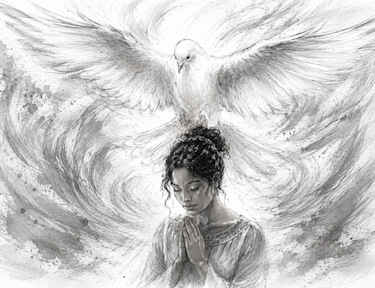
Therefore, leaving the discussion of the elementary principles of Christ, let us go on to perfection, not laying again the foundation of repentance from dead works and of faith toward God, of the doctrine of baptisms, of laying on of hands, of resurrection of the dead, and of eternal judgment. And this we will do if God permits.
(Hebrews 6:1-3)
In the previous post, we talked about the principles of baptisms. There are at least four baptisms that can be distinguished by the baptizer and medium, and each one has its distinct purpose. Most of the contemporary churches focus mainly on water baptism and ignore the other three, especially, the baptism “with Holy Spirit” and “by the Holy Spirit”. Because of this reason, church members are lack of power in witness of Jesus and struggle with church unity. In this post, we will move onto the fourth nutrient of God’s milk, which is laying on of hands.
I don’t know about you, for me, the “laying on of hands” is one of the most common actions I have seen in churches but the least taught subject. And with my human wisdom, I would never think this topic can be listed in the elementary teachings of Christ. Because we experience this frequently in our daily life. When our head hurt, we immediately put our hands on it and massage it to reduce the pain. When we pray for each other, we naturally put our hands around each other arms or shoulders to affirm our agreement on the prayers. But do you know the Bible clearly showed there are four major functions of laying on of hands. Under different scenarios, such functions can be combined or mixed.
1. To Give Blessings or Prophetic Blessings
In the Book of Genesis, chapter 48, Israel blessed Joseph and his two sons, Ephraims and Manasseh in the name of God. Although Manasseh was the firstborn, their grandfather Jacob crossed his hands to give Ephraim the primary blessing, declaring that the younger brother would become greater and produce a "multitude of nations" (Genesis 48:19) This prophecy was fulfilled in the first census after the exodus of Egypt. At that time. The number of the descendants of Ephraim is 40,500 while that of Manasseh is 32,200. In the division of the Promised Land, the Tribe of Ephraim became the most influential force in the Northern Kingdom of Israel although their land area is much smaller than Manasseh’s. Joshua and Samuel were both came from the tribe of Ephraim. In the Old Testament, many prophets sometimes just used the name "Ephraim" to refer to the entire northern kingdom.
In the Gospel books, people also bring their young children and ask Jesus to bless them. Our Lord Jesus placed his hands on them and blessed them. The Bible did not record if any prophetic words were given or not. (Mark 10:13-16, Matthew 19:13-15, and Luke 18:15-17)
Then they brought little children to Him, that He might touch them; but the disciples rebuked those who brought them.But when Jesus saw it, He was greatly displeased and said to them, “Let the little children come to Me, and do not forbid them; for of such is the kingdom of God. Assuredly, I say to you, whoever does not receive the kingdom of God as a little child will by no means enter it”. And He took them up in His arms, laid His hands on them, and blessed them. (Mark 10:13-16)
In Numbers 6:22-27, God explicitly commanded Aaron and his descendants to speak these specific words to place His divine name and protection upon the people. This is considered as the Priestly Blessings. Jesus Christ as our high Priest we confess in heaven, we can always seek His blessings. This is appropriate and biblical.
And the Lord spoke to Moses, saying: “Speak to Aaron and his sons, saying, ‘This is the way you shall bless the children of Israel. Say to them: “The Lord bless you and keep you; The Lord make His face shine upon you, And be gracious to you; The Lord lift up His countenance upon you, and give you peace.” ’“So they shall put My name on the children of Israel, and I will bless them.” (NKJV)
2. Act of Faith in Healing
There are many examples that Jesus laid his hands on people and healed them. If Jesus can raise Lazarus and the Window’s Son of Nain from death to life by commands. He does not need to lay hands on them. Therefore, the ESSENCE of laying hands on people for healing is “faith in God and his words”. There is no healing power in our hands but the Holy Spirit that lived inside of the believers who is doing the healing. A believer who is obedient to God’s Great Commission (Matt. 28:16–20; Luke 24:44–49; Acts 1:6–8) will practice this in faith.
Later He appeared to the eleven as they sat at the table; and He rebuked their unbelief and hardness of heart, because they did not believe those who had seen Him after He had risen. And He said to them, “Go into all the world and preach the gospel to every creature. He who believes and is baptized will be saved; but he who does not believe will be condemned. And these signs will follow those who believe: In My name they will cast out demons; they will speak with new tongues; they will take up serpents; and if they drink anything deadly, it will by no means hurt them; they will lay hands on the sick, and they will recover.” (Mark 16:14-18)
Please note, Jesus especially rebuked the disciples for their unbelief and hardness of their heart. The scripture states that the sign of “laying on hands to get people healed” will follow those who BELIEVE. In our faith journey, if we never see this sign follows us, there is only one explanation - - we do not believe what Jesus said in this command. I used to focus too much on my hands when I pray for people’s healing, but now I repent, and I will put my trust in Jesus to do his healing. All I need, is to believe that He will act as what He said.
3. Receive the Baptism with Holy Spirit
In the early church, the laying on of hands was frequently accompanied by the reception of the baptism of the Holy Spirit. After Philip baptized new believers in Samaria, the apostles Peter and John laid hands on them so they would receive the Holy Spirit (Acts 8:14-17). The similar event also happened when apostles Paul laid his hands on the believers in Ephesus. After they were baptized in the name of Jesus, Paul placed his hands on them, then the Holy Spirit came on them and they spoke in tongues and prophesied. (Acts 19:1-6)
In the past 20 years of my church life, I have never seen believers were baptized with Holy Spirit with the signs of speaking in tongues and prophesies. Part of the reasons, I have not seen the elders will lay hands on them after the water baptism and ask the Lord to baptize them with Holy Spirit. Many times, there are prayers of blessings through laying on of hands. Should we repent for not practicing the basic teachings of laying on of hands?
Some people considers this practice as “Imparting the Holy Spirit”. I think this requires the ministers to be filled with Holy Spirit when who are doing the “imparting” job. I would rather ask our Lord Jesus to do the “imparting” and I do the “laying on the hands” through faith in His words. This might be a lighter yoke.
4. Commissioning and Ordination
In the Old Testament, God commanded Moses to lay his hands on Joshua, officially transferring authority and wisdom to lead the Israelites (Numbers 27:18-20, Deuteronomy 34:9). And in the New Testament, the early church also practice laying on of hands on leaders and missionaries to set them apart for ministry. The congregation laid hands on the first deacons to commission them to serve the church (Acts 6:6), and on Paul and Barnabas before their first missionary trip(Acts 13:3). Paul also instructed Timothy not to ordain church leaders in hasty without proper discernment, or he may share of their sins if that person is not suitable for that position.
I find this is an interesting way to set up a leadership. First of all, the people who are commissioning the leaders should be there physically, considering the less effective communication and transportation methods at that time, which means they need to know the new leaders personally. Secondly, when hands were laid on them, prophetic blessings or baptism of Holy Spirit were also happened to the new ministers. One of the examples was recorded in 1 Timothy 4:14: Do not neglect the gift that is in you, which was given to you by prophecy with the laying on of the hands of the eldership. Thismay be the same event as it is described in 2 Timothy 1:6-7: Therefore I remind you to stir up the gift of God which is in you through the laying on of my hands. For God has not given us a spirit of fear, but of power and of love and of a sound mind. The “gift of God” in this case will refer to the Holy Spirit, because the Holy Spirit is not a spirit of fear but a Spirit of Power, of love, and of a sound mind.
So, “laying on of hands” during the commissioning and ordination not only commission the authorities, missions and duties, but also bestow the spiritual powers and gifts to accomplish the work. If you are send by a church on a mission trip, you better under a church who practice such teachings. It’s not a religious ceremony, but is with real spiritual power in the Kingdom of God. While you are on the mission trip to finish the work, you have the whole church behind you and cover you spiritually, not just financially. Thus, the one who is on the mission trip and the ones who are praying for the trip will be rewarded as well. Based on the Old Testament Law of Moses (Numbers 31:27) and a specific ordinance established by King David (1 Samuel 30:24), hose who go to fight and those who stay behind with the supplies share the captured spoils equally. If we practice these teachings in church, we will have bette quality of ministers and better results of mission trips.
As I am preparing this post, these Bible verses showed up in my mind.
You have hedged me behind and before,
And laid Your hand upon me.
Such knowledge is too wonderful for me;
It is high, I cannot attain it.
Where can I go from Your Spirit?
Or where can I flee from Your presence?
(Psalms 139:5-7)
It’s not about our hands. It’s all about God’s hands. It’s His presence, His power, His comfort and His work through His Spirit. And such knowledge is too wonderful for me to attain!
Praise you Lord!